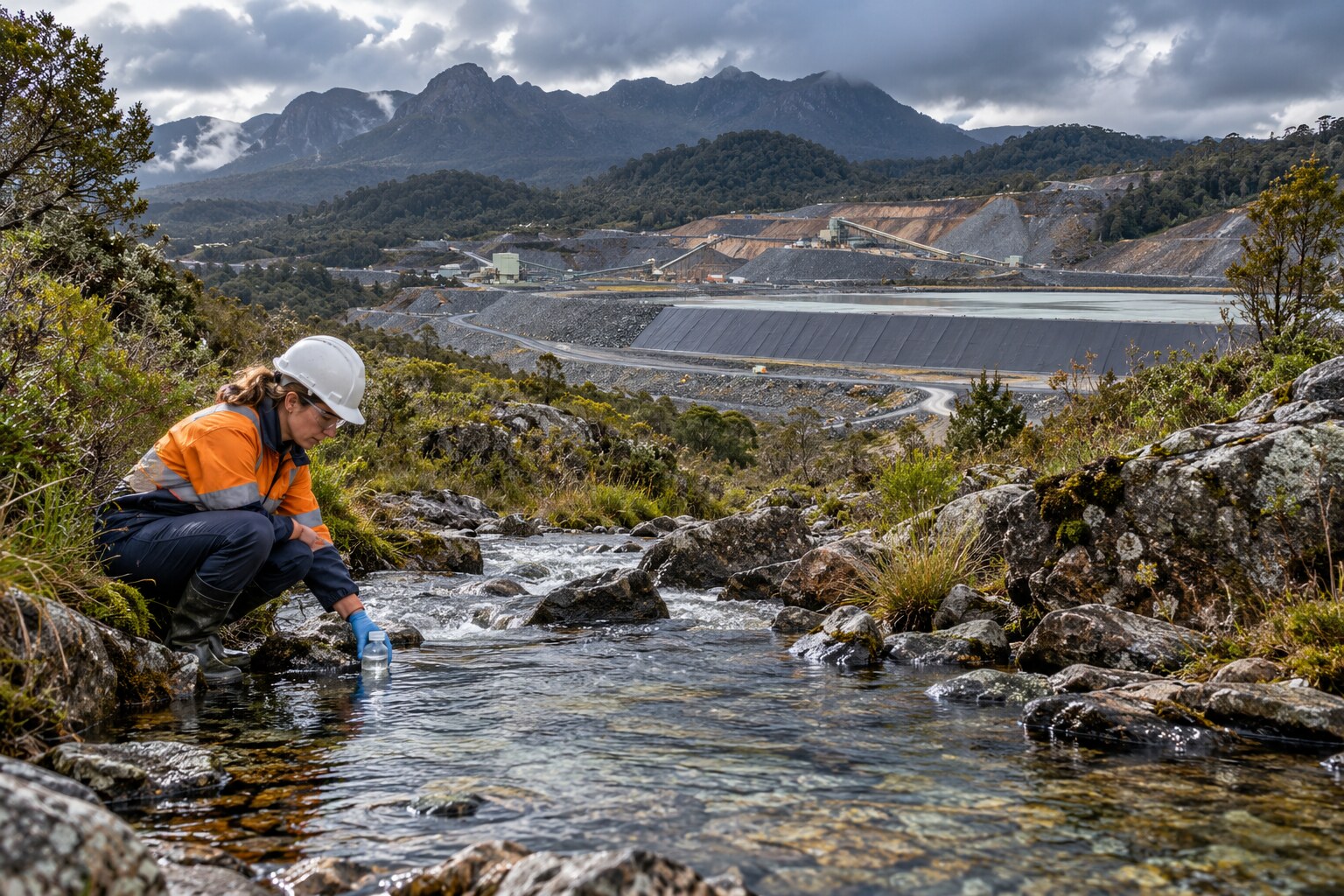
Mining Must Not Leave Tasmanians With the Clean-Up Bill
A mining company may operate for decades. Pollution can remain for generations.
Mining contributes jobs and economic activity, particularly in regional Tasmania. But no company should be permitted to extract private profit while transferring environmental risks and rehabilitation costs to the public.
The Tasmanian EPA identifies major mining risks including tailings dams, waste rock, acidic and metalliferous drainage, dust, noise, groundwater and surface-water contamination, habitat loss and long-term rehabilitation.
These risks do not end when production stops.
Contaminated water can move beyond a mine boundary. Tailings structures require continuing management. Chemical wastes may persist, accumulate in living organisms or enter the food chain. The EPA classifies wastes with toxicity, environmental persistence or bioaccumulation potential among the most hazardous controlled wastes.
The central principle should be simple: the polluter pays.
What needs to change
- Full disclosure of every chemical intended for use before approval is granted.
- Independent baseline testing of water, soil and ecosystems before operations begin.
- Continuous downstream water monitoring, with public results available online.
- Rehabilitation bonds that reflect the genuine worst-case cost—not an optimistic estimate.
- Regular independent reviews of tailings dams and waste-storage facilities.
- Personal and corporate penalties for knowingly misleading or incomplete environmental information.
- Clear legal responsibility for contamination discovered after a mine closes or changes ownership.
- A prohibition on discharging untreated contaminated water into rivers, groundwater or coastal environments.
- No project approval where the applicant cannot demonstrate how waste will remain safe during operation, closure and the decades that follow.
Tasmania needs employment, but employment should not require communities to gamble with drinking water, farmland, fisheries or public health.
If a project is only profitable because taxpayers may eventually inherit its waste, it was never genuinely profitable.